Mid-century flat and low-slope roofs
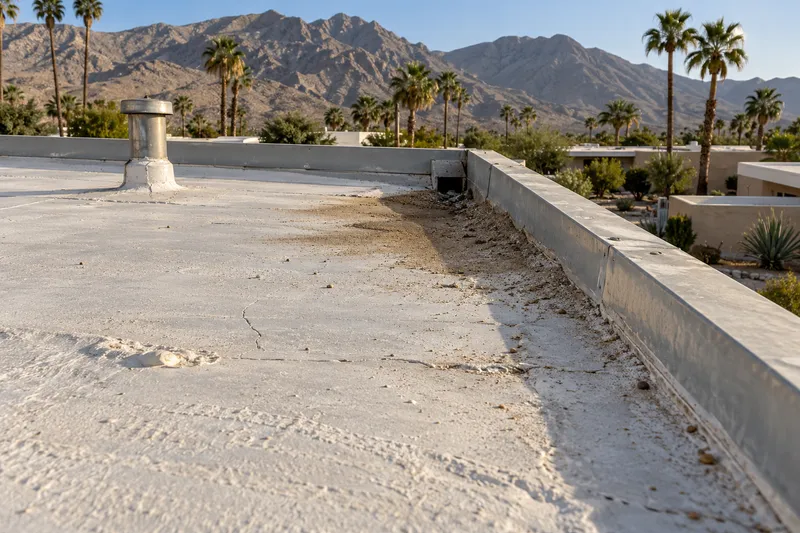
Palm Springs is known for mid-century modern houses, including more than five hundred Alexander Construction Company homes in Racquet Club Estates. Many of these designs use flat or very low-slope roofs, where drainage, edge detail and the condition of earlier coatings decide how the roof performs. Establish the existing layers and how water leaves the roof before choosing between recoating, foam or a new assembly.
Historic designation and visible changes
The city has a long preservation tradition, and some homes, including Donald Wexler’s steel houses, carry historic designation. On a designated or architecturally significant property, the roof profile, fascia and edge metal may be part of what is protected. Confirm any review requirements with the city before specifying changes that alter the roof’s visible lines, thickness or materials.
Estate neighborhoods from the 1930s
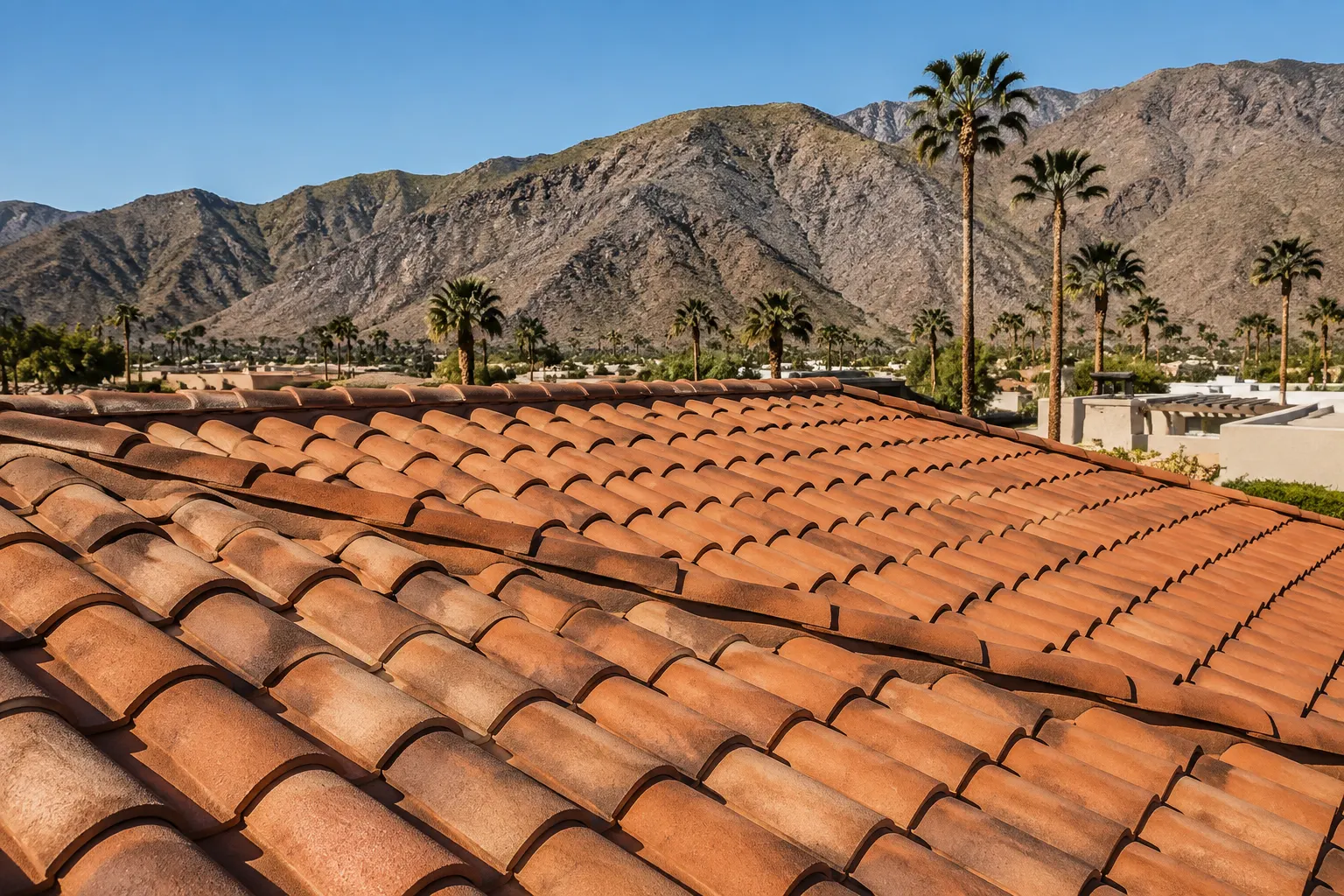
The Movie Colony, Las Palmas and Tahquitz River Estates began building out in the 1930s, decades before the tract development elsewhere in the valley. Houses there may carry clay tile, additions with different roof systems and several generations of repairs. Check the transitions between old and newer sections, where materials and slopes meet, as closely as the main roof surface.
Reservation land inside the city
More than ten percent of Palm Springs is Agua Caliente Band of Cahuilla Indians reservation land, laid out in a checkerboard of alternating sections, and much of it is held on long-term lease. On a leased or reservation parcel, confirm which authority’s permit and inspection requirements apply, and who must approve the work, before the project is scheduled.
Local building patterns help guide an inspection. Your roof’s actual
condition, materials and repair history determine the recommendation.