
Service area

Roofing in Mesa.

Postwar homes, older downtown buildings and East Mesa communities have different roofs. Investigate cooling-equipment openings, low-slope additions and existing layers before choosing a system.

The roofing decision

Find what changed when the cooling equipment changed.

On a Mesa home, an old cooler curb can remain part of the roof long after the equipment changes. The surrounding deck and flashing need assessment along with the main surface. Downtown masonry and East Mesa manufactured-home roofs introduce different structures and should be described separately in a proposal.

Discuss your Mesa roof
  1. Account for active and abandoned openings

    Identify cooler locations, patched openings and equipment curbs. Inspect accessible decking and the transition into the roofing system. The replacement plan should explain how unused penetrations will be closed and who handles any equipment that must move.

    Explore roof replacement
  2. Match an East Mesa proposal to its structure

    A manufactured-home roof or separate cover may have different load and installation requirements from a conventional house. Establish the existing construction before choosing materials or a roof-over. Include the connection to carports and patios in the inspection.

    Explore residential roofing
Illustrative view over ranch houses with shingle roofs and rooftop evaporative coolers, orange trees and a saguaro, the Superstition Mountains on the horizon
Mesa, illustrated. Not a photograph of our work.

The roofs here

The roof assemblies behind Mesa’s buildings.

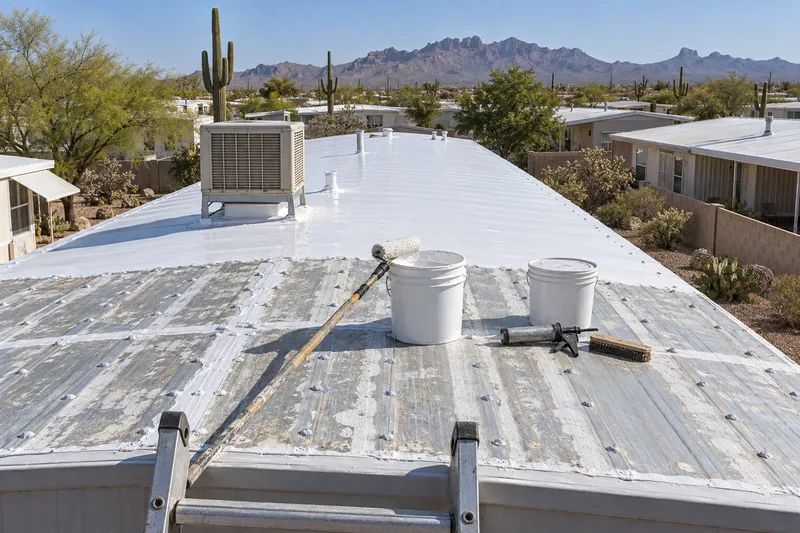
Illustrative metal roof-over on a manufactured home partway through a recoat, sealed screw heads and taped seams beside fresh white coating, buckets, a roller and a caulking gun
Illustration of the roofs described here, not a job of ours.

Pioneer and downtown buildings

Mormon settlers from Utah and Idaho founded Mesa on the mesa in 1878 and reused the old Hohokam canals; the town incorporated in 1883. Downtown and the older neighborhoods around it have early twentieth-century houses and commercial buildings. Expect layered roofs, board sheathing and low-slope sections behind parapets.
Postwar ranch houses

Mesa’s central neighborhoods filled with postwar ranch houses: low-pitched shingle roofs, flat roofs over carports and additions, and evaporative coolers on the roof. Where a cooler sits or once sat, check the curb flashing and the deck beneath.

East Mesa and winter communities

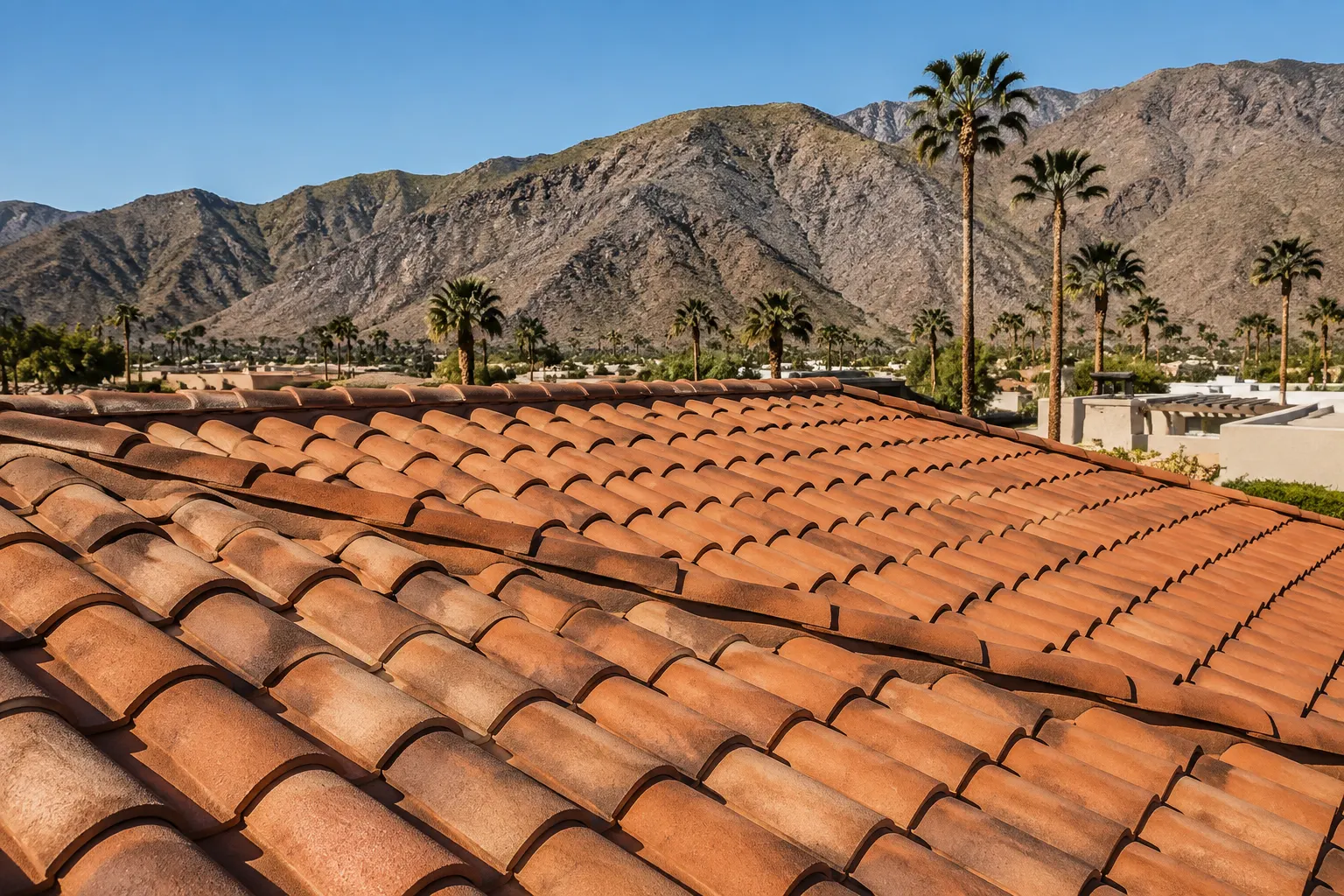
East Mesa grew later, with tile-roofed subdivisions and many manufactured-home and RV communities. Those communities have low-slope metal or membrane roofs and roof-overs, which call for lightweight coatings and careful drainage rather than heavier systems.

Local building patterns help guide an inspection. Your roof’s actual condition, materials and repair history determine the recommendation.

Conditions

Roof exposure in Mesa.

  • Long summers, aging coolers

    Mesa’s summer is as long as Phoenix’s. Rooftop evaporative coolers add water to roofs that are already hot, and leaks at their drain lines and curbs are common. Inspect those points every season the cooler runs.

  • Storms off the Superstitions

    Monsoon storms that form over the mountains east of the valley often reach east Mesa first, with hail and gusts. Check tile, ridge caps and coatings on the east side of the city after a strong storm.

  • Canals and flood irrigation

    Canals still run through Mesa, and older neighborhoods are flood irrigated. Combined with roof runoff, that water can sit against walls. Downspouts and grading should carry roof water away.

  • 2024 codes from January 2026

    Mesa’s 2024 International Codes apply to permit applications submitted on or after January 8, 2026. Work already submitted or under construction is not affected. Confirm the edition for a specific permit before specifying the roof assembly.

Compare the same work

Before you approve a Mesa roofing estimate.

Use these points to make the proposed work specific to your property.

  • Identify active cooler curbs, removed-equipment openings and the work at each.
  • Include transitions between pitched roofs and flat carport or patio sections.
  • Record manufactured-home or roof-over construction and required compatibility checks where applicable.

Check the local approval route

Ask City of Mesa Development Services which requirements apply to the parcel and proposed work. If another authority or an association also reviews the project, establish that before ordering materials.

City of Mesa Development Services

Code and permits

Roofing codes and permits in Mesa.

Confirm the requirements for the building and proposed roof assembly. The links below go directly to the relevant authorities.

Mesa’s 2024 codes

Mesa adopted the 2024 International Codes, which take effect for permit applications submitted on or after January 8, 2026. Projects already submitted, under review or under construction are not affected, and earlier design to the 2024 codes was allowed through the code modification process.

Mesa’s building code page

Climate zone 2B

Maricopa County is in IECC climate zone 2B, hot and dry. Arizona has no statewide energy code like California’s Title 24: the energy rules for a roof are the ones in the IECC edition the city has adopted, applied in that zone. Building type and roof slope still decide which of them apply to a given project.

The county climate zone guide

Wind

Maricopa County publishes no special wind region list, so there is no county figure to quote for Mesa; the design wind speed comes from the ASCE 7 maps for the individual site. Look the address up and confirm the figure with the building department. Wind load rises with the square of the speed, so a few miles an hour changes what the fastenings, the perimeter and the edge metal have to carry.

ATC Hazards by Location

Who issues the permit

City of Mesa Development Services is the local authority for roofing permits. Establish the permit and inspection requirements for your project before work begins. Our Arizona license is ROC 367833.

City of Mesa Development Services

Code editions and dates here are as each city published them. They explain what applies; they are not a site-specific design calculation. Confirm the governing edition and design criteria with the building department.

Before you plan the work

Roofing questions in Mesa.

Why inspect a former rooftop cooler location on a Mesa home?

The opening, curb or earlier patch may remain a vulnerable detail after equipment removal. Inspect the accessible deck and flashing, and ask how the area will be incorporated into the replacement assembly rather than simply covered again.

Should the flat carport roof be part of a Mesa reroof assessment?

Yes, including the junction with the main roof. It may use a different material and slope. The estimate should identify which sections are included, how each drains and how new work connects to retained roofing.

Can a manufactured home in East Mesa take a heavier replacement roof?

Do not assume so. Establish the structure, existing assembly and proposed load before selecting materials. A conventional house’s roofing detail is not automatically suitable for a manufactured home or later roof-over.

What should an older downtown Mesa roof assessment cover?

Check earlier layers, deck condition, parapet caps, wall connections and outlets. The masonry interface and drainage should be included in the scope, alongside the open roof surface and any equipment penetrations.

The whole service area, with Mesa marked. The pins are city centres. No job, photograph or date is marked on this map.

The East Valley, from the Salt River south to Gilbert and east to Apache Junction.

Elevation
1326 ft above sea level
Incorporated
1883
Population
504,258 2020 census
Area
139.42 sq mi
ZIP codes
85201–85216, 85274–85275 and 85277
Energy code
IECC climate zone 2B

Elevation, incorporation, census and area are public record. The climate zone is Maricopa County's, from the county table in the International Energy Conservation Code.

Know what your
roof needs.

Free written estimate. No obligation.

California

(442) 637-5222

Arizona

(480) 978-5147

Coachella Valley + Greater Phoenix

A 50-mile Phoenix radius, including Buckeye.

Service hours

Mon–Fri
7:00 AM – 7:00 PM
Sat
8:00 AM – 5:00 PM
Sun
Closed

Add roof details (optional)

By requesting a quote, you agree that we may contact you about your roof. No obligation.