
Service area

Roofing in Fountain Hills.

Hillside homes can make the roof visible from above, but surface appearance tells only part of the story. Inspect outlets, parapets and hidden layers before deciding on coating or replacement.

The roofing decision

A hillside view is useful. A detail inspection is better.

In Fountain Hills, roof work needs to fit both the assembly and the sloping lot. A visible coating crack may deserve investigation without proving the whole roof has failed. The useful comparison explains substrate condition, drainage and access rather than relying on how the surface looks from a neighboring slope.

Discuss your Fountain Hills roof
  1. Trace the outlet all the way to discharge

    Inspect scupper openings, wall transitions and evidence of backup at low areas. Identify where roof water leaves the building and distinguish that from hillside runoff. A coating scope should state any outlet or slope corrections rather than leaving drainage implicit.

    Explore spf recoating
  2. Plan removal on the actual hillside property

    For tile or broader replacement, establish safe delivery, removal and staging routes around the lot. If new work changes visible roof edges, check applicable review requirements. The proposal should describe connections to retained roof sections.

    Explore roof replacement

Conditions

Roof exposure in Fountain Hills.

  • Elevation and slopes

    The town rises from about 1,520 feet at the fountain to over 3,000 feet on the McDowell spur, a few hundred feet above Phoenix. Nights are a little cooler, days nearly as hot. The temperature swing works sealants and flashings harder.

  • Runoff on hillside lots

    Steep lots and washes move monsoon runoff fast. Roof drainage needs to land somewhere that won’t erode a slope or send water into a neighbor’s yard. Scuppers and downspouts should discharge onto rock or a drain.

  • Storms off the mountains

    Summer storms often form over the higher ground to the north and east. Gusts and hail hit roof edges, tile and coatings. Check ridges and edge metal after the season.

  • Codes and design review

    Fountain Hills applies the 2024 International Codes to building permit applications received on or after September 1, 2025. Hillside lots can also have their own development standards. Confirm both before work starts.

The roofs here

The roof assemblies behind Fountain Hills’s buildings.

A planned town on hillsides

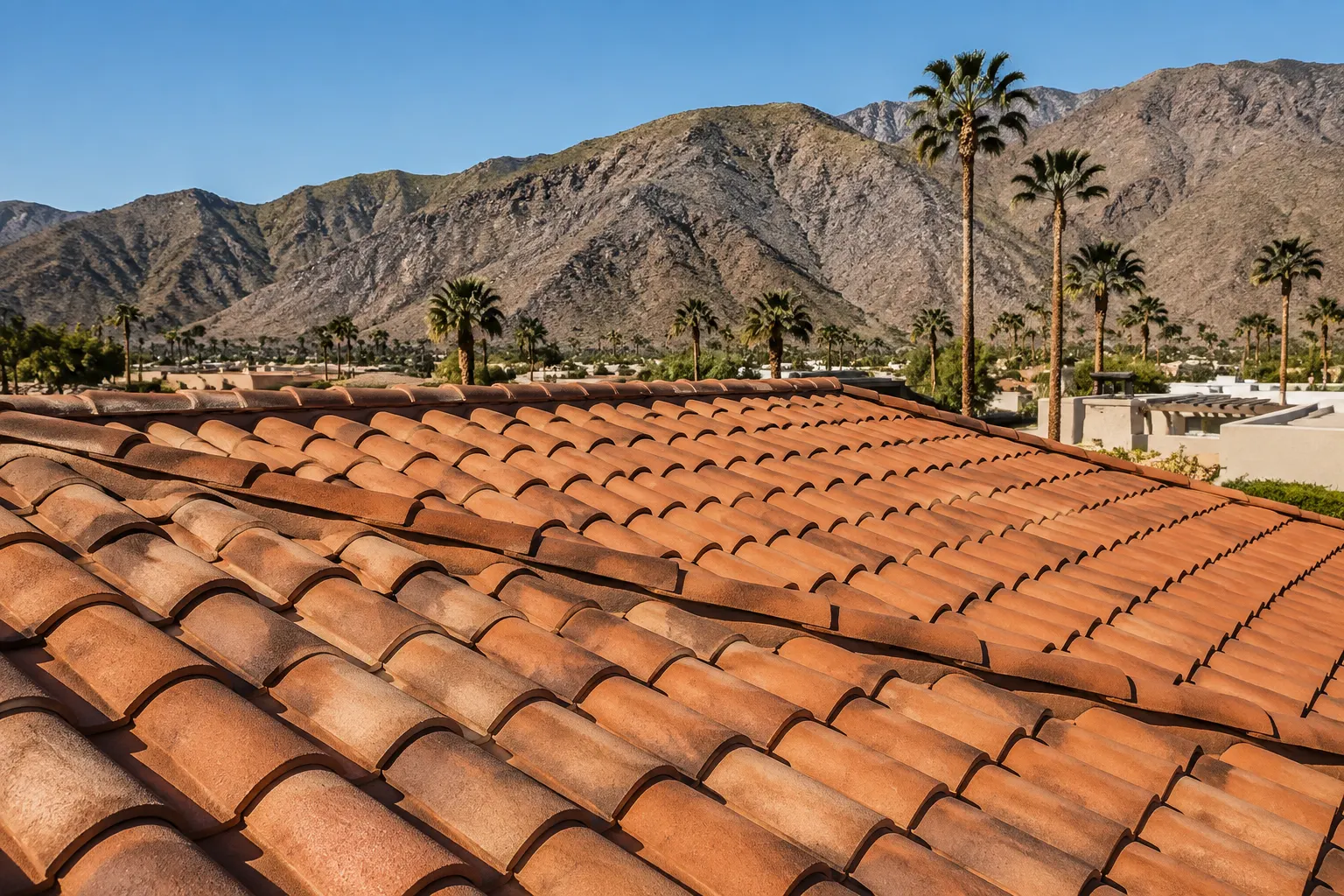
C.V. Wood of McCulloch Oil developed Fountain Hills, and its fountain was built in 1970. Houses climb hillside lots from the fountain toward the McDowell Mountains. Many have flat roofs behind parapets in the desert style; others carry concrete or clay tile.
Flat roofs that need upkeep

The flat roofs here are typically foam or coated membrane. They last when the coating is renewed before the foam is exposed and when the scuppers stay clear. A hillside lot gives a clear view of the roof from above, which makes cracked coating easy to see.

Houses from several decades

Fountain Hills grew quickly in the 1990s; between the 1990 and 2000 censuses it was among the faster-growing places in Arizona. Houses from that decade may retain original components or have later replacements. Assess tile underlayment and coatings before deciding whether renewal is needed.

Local building patterns help guide an inspection. Your roof’s actual condition, materials and repair history determine the recommendation.

Compare the same work

Before you approve a Fountain Hills roofing estimate.

Use these points to make the proposed work specific to your property.

  • Record scupper and parapet conditions with the substrate assessment.
  • Identify access and material handling on the actual sloping lot.
  • Specify visible edge changes and any applicable review before ordering.

Check the local approval route

Ask Town of Fountain Hills Building Safety which requirements apply to the parcel and proposed work. If another authority or an association also reviews the project, establish that before ordering materials.

Town of Fountain Hills Building Safety

Code and permits

Roofing codes and permits in Fountain Hills.

Confirm the requirements for the building and proposed roof assembly. The links below go directly to the relevant authorities.

Fountain Hills’ 2024 codes

Fountain Hills lists the 2024 International Building, Residential, Fire and Plumbing Codes and the 2023 National Electrical Code as adopted, effective for building permit applications received on or after September 1, 2025. The town’s adopted codes page lists the full set.

Fountain Hills adopted codes

Climate zone 2B

Maricopa County is in IECC climate zone 2B, hot and dry. Arizona has no statewide energy code like California’s Title 24: the energy rules for a roof are the ones in the IECC edition the city has adopted, applied in that zone. Building type and roof slope still decide which of them apply to a given project.

The county climate zone guide

Wind

Maricopa County publishes no special wind region list, so there is no county figure to quote for Fountain Hills; the design wind speed comes from the ASCE 7 maps for the individual site. Look the address up and confirm the figure with the building department. Wind load rises with the square of the speed, so a few miles an hour changes what the fastenings, the perimeter and the edge metal have to carry.

ATC Hazards by Location

Who issues the permit

Town of Fountain Hills Building Safety is the local authority for roofing permits. Establish the permit and inspection requirements for your project before work begins. Our Arizona license is ROC 367833.

Town of Fountain Hills Building Safety

Code editions and dates here are as each city published them. They explain what applies; they are not a site-specific design calculation. Confirm the governing edition and design criteria with the building department.

Before you plan the work

Roofing questions in Fountain Hills.

Does a visible crack mean my Fountain Hills flat roof needs replacement?

A visible crack is a reason for assessment, not a complete diagnosis. Inspect the coating, substrate and surrounding details for moisture or deterioration. The findings determine whether preparation and recoating are suitable or a broader scope is needed.

What should a scupper inspection include on a hillside home?

Inspect the opening, connection to the roof and wall, surrounding low areas and discharge route. Identify overflow evidence and obstructions. Roof drainage and water moving across the hillside should be evaluated as separate routes.

Why can two Fountain Hills reroofs have different access costs?

Sloping driveways, staging space and roof access can change material handling and removal arrangements. Ask each estimate to describe those site conditions so the comparison reflects the same delivery and cleanup responsibilities.

What should be assessed beneath hillside tile roofing?

Check the underlayment and flashings at valleys, walls and penetrations, not only visible tiles. Document which sections have deterioration and how new work meets retained sections. Exposure and appearance alone do not establish replacement scope.

The whole service area, with Fountain Hills marked. The pins are city centres. No job, photograph or date is marked on this map.

East of Scottsdale, between the McDowell Mountains and the Fort McDowell Yavapai Nation.

Elevation
1798 ft above sea level
Incorporated
1989
Population
23,820 2020 census
Area
20.37 sq mi
ZIP codes
85268, 85269
Energy code
IECC climate zone 2B

Elevation, incorporation, census and area are public record. The climate zone is Maricopa County's, from the county table in the International Energy Conservation Code.

Know what your
roof needs.

Free written estimate. No obligation.

California

(442) 637-5222

Arizona

(480) 978-5147

Coachella Valley + Greater Phoenix

A 50-mile Phoenix radius, including Buckeye.

Service hours

Mon–Fri
7:00 AM – 7:00 PM
Sat
8:00 AM – 5:00 PM
Sun
Closed

Add roof details (optional)

By requesting a quote, you agree that we may contact you about your roof. No obligation.