
Service area

Roofing in Paradise Valley.

Custom houses can combine clay tile, low-slope roofs and multiple additions. Assess each assembly and the connections between them before deciding what to retain or replace.

The roofing decision

One custom home can need several roof strategies.

A Paradise Valley roof proposal should read like a plan for the actual house. Different wings can have different materials, skylights and drainage routes. Identify those systems first, then decide whether the scope is tile underlayment work, flat-roof maintenance, replacement or a coordinated combination.

Discuss your Paradise Valley roof
  1. Plan tile retention before removal

    Where existing clay tile may be reused, inspect its condition and establish handling, storage and matching replacement pieces. Ask how new underlayment and flashings meet retained architectural details. Reuse needs a complete installation plan, not just a material-saving assumption.

    Explore tile roofing
  2. Map the flat-roof and skylight details

    Inspect skylight curbs, parapets and changes between flat and pitched sections. Identify which roof areas are suitable for recoating and which need another scope. On a large lot, confirm access to each wing instead of assuming one staging area serves the whole property.

    Explore spf recoating

The roofs here

The roof assemblies behind Paradise Valley’s buildings.

Large lots, custom roofs

Paradise Valley was settled after the Second World War on one-to-five-acre lots and incorporated in 1961 to keep that pattern. Houses are custom, and so are their roofs: clay tile, flat foam roofs, standing-seam metal and combinations of all three. Each needs its own inspection plan.
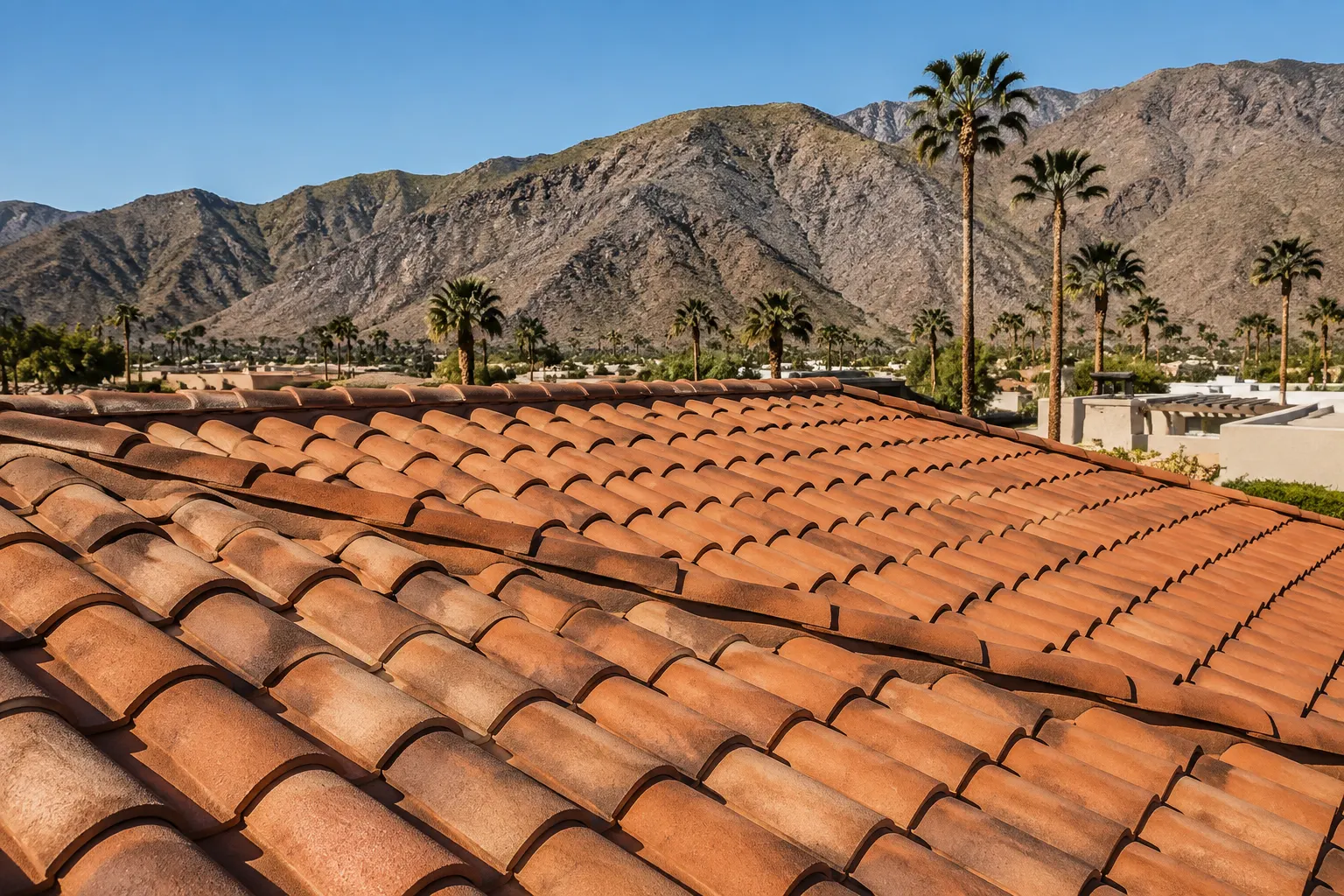
Clay tile on estates

Clay tile is common on the larger estates. Clay can outlast the underlayment by decades, which makes careful removal, storage and reinstall of existing tile part of an underlayment replacement. Matching replacement tile for broken pieces takes planning.

Mid-century flat roofs

Some older houses are mid-century designs with flat roofs and long overhangs. They are usually foam or built-up, often with skylights. Coating schedules and skylight curbs decide how well they hold up.

Local building patterns help guide an inspection. Your roof’s actual condition, materials and repair history determine the recommendation.

Conditions

Roof exposure in Paradise Valley.

  • Mountain-side sun and shade

    Lots on the slopes of Camelback and Mummy Mountain get very different exposure from those on the flats. South-facing roofs take full sun and age fastest. North slopes and shaded sections stay damp longer after rain.

  • Runoff off the mountains

    Monsoon rain runs off the mountains quickly. Lots below them need roof and site drainage that work together. Scuppers and downspouts should discharge where hillside runoff is already managed.

  • Long roofs, many details

    Large houses mean long valleys, many penetrations and multiple roof planes. More details mean more places to leak. A regular inspection that covers every plane catches small issues early.

  • A town building department

    Paradise Valley’s Community Development department issues building permits and handles inspections. Hillside lots may have additional review. Confirm both the code edition and any hillside requirements before work starts.

Compare the same work

Before you approve a Paradise Valley roofing estimate.

Use these points to make the proposed work specific to your property.

  • Identify each roof system, house wing and transition included in the proposal.
  • Specify tile handling and replacement-piece sourcing where reuse is proposed.
  • List skylights, parapets and drainage details included in flat-roof preparation.

Check the local approval route

Ask Town of Paradise Valley Community Development which requirements apply to the parcel and proposed work. If another authority or an association also reviews the project, establish that before ordering materials.

Town of Paradise Valley Community Development

Code and permits

Roofing codes and permits in Paradise Valley.

Confirm the requirements for the building and proposed roof assembly. The links below go directly to the relevant authorities.

Paradise Valley’s adopted code

Paradise Valley adopts its building codes by town ordinance, with its own amendments. The edition in force was not confirmed for this page. The town’s permits and handouts page is the place to start, and Community Development can confirm the edition.

Paradise Valley permits and handouts

Climate zone 2B

Maricopa County is in IECC climate zone 2B, hot and dry. Arizona has no statewide energy code like California’s Title 24: the energy rules for a roof are the ones in the IECC edition the city has adopted, applied in that zone. Building type and roof slope still decide which of them apply to a given project.

The county climate zone guide

Wind

Maricopa County publishes no special wind region list, so there is no county figure to quote for Paradise Valley; the design wind speed comes from the ASCE 7 maps for the individual site. Look the address up and confirm the figure with the building department. Wind load rises with the square of the speed, so a few miles an hour changes what the fastenings, the perimeter and the edge metal have to carry.

ATC Hazards by Location

Who issues the permit

Town of Paradise Valley Community Development is the local authority for roofing permits. Establish the permit and inspection requirements for your project before work begins. Our Arizona license is ROC 367833.

Town of Paradise Valley Community Development

Code editions and dates here are as each city published them. They explain what applies; they are not a site-specific design calculation. Confirm the governing edition and design criteria with the building department.

Before you plan the work

Roofing questions in Paradise Valley.

Can a Paradise Valley home need tile work and flat-roof work at the same time?

Yes, but each assembly needs its own findings and scope. The proposal should explain how the systems meet, which sections remain and how drainage crosses the junctions. One condition assessment should not be assumed to apply to every wing.

What should I ask before reusing clay tile on a custom home?

Ask about suitability, removal and storage, replacement pieces and the detail over the new underlayment. Existing tile condition and the proposed installation determine reuse. Matching the visible finish also needs planning before tear-off.

Should a skylight leak be treated as a coating problem?

Investigate the skylight, curb, flashing and surrounding roof before deciding. The entry point may be separate from the coating surface. Ask the scope to identify which component needs work and whether another trade is involved.

How should I compare estimates for a large Paradise Valley roof?

Compare the same roof sections, materials, transitions, skylights and outlet work. Include access and equipment coordination. A total price or square-foot figure alone may hide differences in retained materials, preparation and detail repairs.

The whole service area, with Paradise Valley marked. The pins are city centres. No job, photograph or date is marked on this map.

Between Phoenix and Scottsdale, around Camelback Mountain and Mummy Mountain.

Elevation
1854 ft above sea level
Incorporated
May 24, 1961
Population
12,658 2020 census
Area
15.41 sq mi
ZIP code
85253
Energy code
IECC climate zone 2B

Elevation, incorporation, census and area are public record. The climate zone is Maricopa County's, from the county table in the International Energy Conservation Code.

Know what your
roof needs.

Free written estimate. No obligation.

California

(442) 637-5222

Arizona

(480) 978-5147

Coachella Valley + Greater Phoenix

A 50-mile Phoenix radius, including Buckeye.

Service hours

Mon–Fri
7:00 AM – 7:00 PM
Sat
8:00 AM – 5:00 PM
Sun
Closed

Add roof details (optional)

By requesting a quote, you agree that we may contact you about your roof. No obligation.